Integrating Yoga for Muscle Building: A Fusion of Flexibility and Strength
Yoga is often linked with calm breathing and relaxation, but modern training has shown that it can also support strong muscle development. When practiced with intent and structure, yoga builds control, stability and active tension in ways that complement weight training.
This combination helps people gain strength while keeping joints healthy and movement fluid. Trainers and athletes are now blending yoga for muscle building to create balanced routines that improve form, resilience and overall performance.
How Yoga Supports Strength Development
Yoga builds strength through slow, controlled muscle engagement. Many postures force the body to hold its own weight, which increases tension in key areas like the shoulders, legs, hips and core. Because the movements require full control, each repetition improves stability and muscular awareness. This approach helps new lifters and advanced athletes increase strength without overloading the joints.
Why Flexibility Plays a Role in Muscle Growth
Flexibility improves range of motion, which allows deeper and safer muscle activation during training. Yoga for strength and flexibility enhances lengthening, opening and balancing movements that help muscles recover faster. Better mobility also reduces stiffness, helping people perform lifts with better form and fewer restrictions.
Essential Yoga Poses That Support Muscle Building
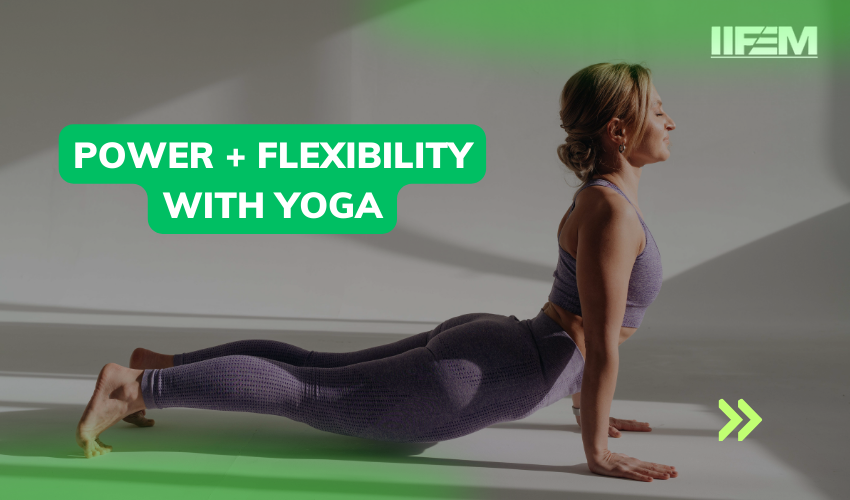
Several poses are especially helpful for building strength. Plank variations challenge the core, arms and shoulders. Chair pose builds lower body tension similar to squats. Warrior sequences activate the legs, hips and back while improving balance. Slow transitions between poses stimulate muscles that are often neglected in regular gym routines.
Breathing Techniques That Improve Body Control
Yoga emphasizes controlled breathing, which helps maintain tension and stamina during strength-focused flows. Learning to match breath with movement keeps the body stable, prevents rushing through poses and supports oxygen delivery to working muscles. This improves endurance and sharpens focus during difficult postures.
How Yoga Complements Weight Training
Yoga enhances strength training by improving form and movement quality. Lifters who practice yoga often notice better posture, stronger bracing, smoother range of motion and fewer injuries. It acts as both recovery and strength practice, giving the body a balanced training structure that supports long term growth.
Can You Build Muscle Only Through Yoga
Muscle can grow through consistent yoga practice, especially when poses are held for time and progressed gradually. While yoga may not provide the same overload as heavy lifting, it strengthens stabilizers and deeper muscle layers that help with overall strength. This makes it a strong addition to any hypertrophy routine.
Who Benefits Most From Strength Focused Yoga Routines
People who want to train without heavy weights benefit greatly from yoga based strength training. Athletes can use it to fix mobility issues. Beginners can use it as a foundation for strength development. Coaches can integrate yoga into their programs to offer safer and more complete training options.
Why Trainers Are Adding Yoga to Their Skill Set
Trainers who learn yoga gain the ability to address mobility, posture, stability and recovery in a single session. This increases client satisfaction and builds trust. Online yoga instructor training and yoga instructor certification online give coaches a convenient way to develop these skills without leaving their schedule.
Learning Yoga Through Online Teacher Training Programs
Online yoga teacher training helps trainers understand body alignment, breathing, sequencing and safe progression. The structure teaches how to guide clients through routines that improve strength and flexibility together. With easy access to recorded lessons and assessments, trainers can upgrade their skill set from home.
The Future of Strength Training With Yoga
More coaches are combining traditional gym work with yoga to create a balanced training model. This fusion helps clients build strength while staying mobile, calm and injury free. As training methods evolve, yoga continues to play a growing role in building strength with control and awareness.
Upgrade Your Skills With IIFEM’s Yoga for Muscle Building Program
Trainers who want to apply yoga for muscle building in real coaching sessions can learn through IIFEM’s Yoga for Muscle Building course. The program explains pose progressions, muscle activation, breathing patterns, sequencing and coaching methods that support strength development. This course is designed for trainers who want practical tools for guiding clients safely and effectively. With flexible online learning and clear instruction, IIFEM helps fitness professionals expand their skill set and offer complete coaching solutions.
FAQ’S
1. Can yoga help with muscle building?
Yes, yoga can support muscle building by using controlled bodyweight tension, long holds and slow transitions. These movements activate stabilizers and large muscle groups, helping the body gain strength with better form and balance.
2. Which yoga poses are best for gaining strength?
Poses like Plank, Chair, Warrior One and Warrior Two help strengthen the legs, core, shoulders and back. Holding these poses for time increases muscle activation and improves stability.
3. Is yoga enough to build muscle without weight training?
Yoga can build muscle, especially in beginners, but it may not match the overload of heavy resistance training. The best approach is a combination of both for balanced strength and flexibility.
4. How does yoga improve flexibility for strength training?
Yoga stretches tight muscles, improves range of motion and reduces stiffness. This helps lifters perform exercises with better technique, deeper muscle engagement and fewer injuries.
5. Can trainers combine yoga with traditional gym coaching?
Yes, trainers can blend yoga with strength programs to enhance mobility, posture and recovery. This mix creates a more complete training model that supports long term progress.
Category
Recent Blog

Why is insulin neede... Read more
July 05,2023
10 Tips for Strength... Read more
August 14,2023
Sample Strength and ... Read more
September 06,2023
Why are some lifters... Read more
September 15,2023
Why do Barbells and ... Read more
September 22,2023
Secret Routine to Bu... Read more
September 26,2023
When to use Insulin,... Read more
September 28,2023
Why lifters should u... Read more
September 29,2023
What is power traini... Read more
October 09,2023
The Future of Fitnes... Read more
October 17,2023
Why Pursue a Fitness... Read more
October 21,2023
Career Paths for Cer... Read more
October 31,2023
Elevating Your Perso... Read more
November 21,2023
Gym Safety Correctiv... Read more
December 26,2023
5 Different Types of... Read more
December 27,2023
Elevate Your Fitness... Read more
December 28,2023
Embark on Your Fitne... Read more
January 24,2024
Mastering Nutrition ... Read more
January 24,2024
Building Strength wi... Read more
January 27,2024
Boost Your Career: B... Read more
January 27,2024
7 main reasons why y... Read more
February 15,2024
Unlocking Essential ... Read more
February 19,2024
Unlock Your Fitness ... Read more
February 20,2024
Unveiling the Path t... Read more
February 28,2024
How to choose the ri... Read more
February 29,2024
Strengthening Weak S... Read more
March 20,2024
How a Fat Loss and E... Read more
March 27,2024
Transformative Insig... Read more
March 27,2024
The Importance of a ... Read more
April 10,2024
Mastering the Art of... Read more
April 22,2024
Unlocking Your Caree... Read more
April 23,2024
The Evolution of Per... Read more
May 27,2024
Elevate Your Fitness... Read more
May 28,2024
Choosing the Right P... Read more
June 25,2024
Role of Protein in F... Read more
June 26,2024
Career Opportunities... Read more
June 27,2024
How Fitness Certific... Read more
July 29,2024
Building a Successfu... Read more
July 30,2024
Qualities to Look fo... Read more
August 21,2024
How Gym Trainer Cert... Read more
August 28,2024
How Fitness Trainer ... Read more
September 20,2024
The Role of a Person... Read more
September 23,2024
Immunity Boosting Pl... Read more
October 17,2024
How Fitness Trainers... Read more
October 22,2024
Transform Your Fitne... Read more
October 28,2024
Certified vs. Uncert... Read more
November 22,2024
The Role of Nutritio... Read more
November 25,2024
The Importance of Co... Read more
December 28,2024
5 Powerlifting Train... Read more
December 28,2024
How Personal Trainer... Read more
January 24,2025
Essential Online Nut... Read more
January 25,2025
How Personal Trainer... Read more
January 27,2025
5 Immunity-Boosting ... Read more
March 01,2025
What to Look for in ... Read more
March 01,2025
The Impact of a Pers... Read more
March 27,2025
The Benefits of Beco... Read more
March 28,2025
How to Choose the Ri... Read more
April 24,2025
Turbo Test: Unlockin... Read more
April 25,2025
How to Build a Perfe... Read more
April 29,2025
10 Powerful Yoga Asa... Read more
May 24,2025
How to Track Your Ca... Read more
May 26,2025
Fast-Track Your Fitn... Read more
May 28,2025
Top Career Paths You... Read more
May 29,2025
10 Reasons to Enroll... Read more
June 23,2025
How to Turn Your Pas... Read more
June 28,2025
Trainer vs Coach Wha... Read more
June 30,2025
How IIFEM Plans to C... Read more
July 01,2025
Go Global with IIFEM... Read more
July 11,2025
How to Avoid the Top... Read more
July 22,2025
No English No Proble... Read more
July 25,2025
How Education Can El... Read more
August 19,2025
Real Stories from II... Read more
August 20,2025
Why Gym Owners Prefe... Read more
August 26,2025
How Science Based Tr... Read more
August 31,2025
Why an International... Read more
September 10,2025
What Makes IIFEM the... Read more
September 15,2025
How to Build a Succe... Read more
September 22,2025
Your Passion and Our... Read more
September 27,2025
Fat Loss & Endurance... Read more
October 16,2025
Benefits of Whey Pro... Read more
October 21,2025
Strength and Conditi... Read more
October 27,2025
From Trainer to Gym ... Read more
October 29,2025
Powerlifting Trainin... Read more
November 12,2025
Pre-Workout vs Post-... Read more
November 17,2025
Building a Hybrid Fi... Read more
November 19,2025
Why Most Weight Loss... Read more
November 21,2025
Why Great Coaches Do... Read more
December 18,2025
From Fitness Coach t... Read more
December 18,2025
Personal Trainers Sa... Read more
January 16,2026
Diploma in Fitness T... Read more
January 16,2026
Join Gym Training Co... Read more
February 10,2026
How to Become a Cert... Read more
February 10,2026
How a Certified Pers... Read more
February 18,2026
Turning Your Certifi... Read more
February 18,2026
Confused About Certi... Read more
March 14,2026
Turning Fitness Enth... Read more
March 14,2026
The Personal Trainer... Read more
March 14,2026
Building Authority i... Read more
March 18,2026
Top Fitness Skills E... Read more
April 10,2026
How IIFEM Certificat... Read more
April 15,2026
Thinking of Becoming... Read more
April 22,2026
Why Certified Fitnes... Read more
April 29,2026
Top 5 Gym Trainer Co... Read more
May 08,2026
Choose the Top Perso... Read more
May 15,2026
Become Top Physical ... Read more
May 16,2026
Online Diploma in Fi... Read more
May 21,2026
Best Gym Trainer Cer... Read more
June 10,2026
How to Become a Cert... Read more
June 08,2026
How to Become a Cert... Read more
June 11,2026
Top Career Opportuni... Read more
June 08,2026
Why the Fitness Indu... Read more
July 16,2026
How to Start Your Ca... Read more
July 18,2026
Why Online Certifica... Read more
July 26,2026
Want to Become a Cer... Read more
July 28,2026
Why Personal Trainer... Read more
August 10,2026
How to Choose the Ri... Read more
August 15,2026
What to Expect from ... Read more
August 25,2026
What Makes a Perfect... Read more
August 22,2026
How to Become a Cert... Read more
September 09,2026
Get Certified in Gym... Read more
September 11,2026
Certified Fitness Tr... Read more
September 16,2026
How to Design Workou... Read more
September 25,2026
Strength & Condition... Read more
October 05,2026Trainer to Master Tr... Read more
October 08,2026Diet Management Cour... Read more
October 11,2026
Corrective Exercise ... Read more
October 15,2026