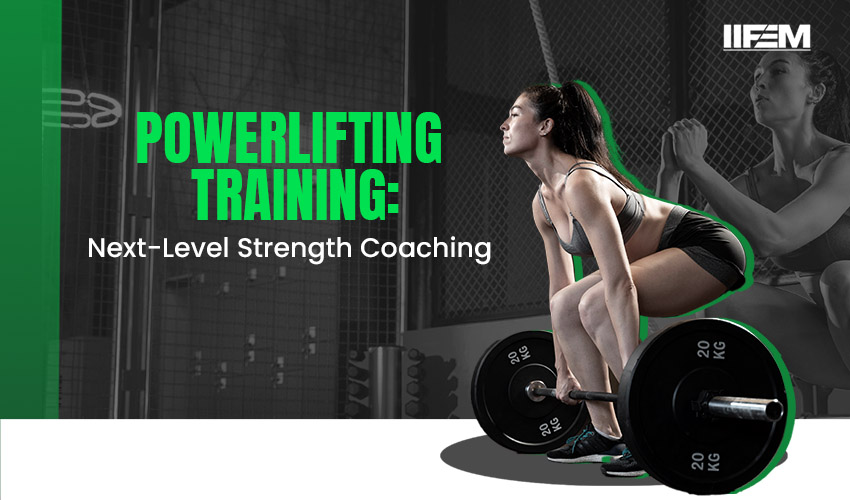
Powerlifting Training: Next-Level Strength Coaching
Powerlifting is more than lifting heavy weights, it’s about mastering technique, precision and progressive strength development. A Powerlifting Training Specialist goes beyond basic coaching, combining the science of biomechanics, programming and athlete management. With an advanced powerlifting program, trainers can coach athletes to safely push their limits while reducing the risk of injury.
Why Every Strength Coach Should Pursue Powerlifting Certification?
A professional certification separates hobbyists from true experts. Pursuing a powerlifting certification helps trainers understand structured programming, load management and recovery strategies. This knowledge empowers coaches to deliver measurable results for athletes, build trust with clients and attract higher-level opportunities in gyms, sports facilities, and academies.
Learning Through Powerlifting Certification Online
With the rise of e-learning, trainers no longer need to attend in-person workshops to grow. A powerlifting certification online gives flexibility to study from anywhere, at any pace. These online modules cover topics such as lift mechanics, periodization, mobility and athlete evaluation. Trainers can apply lessons instantly in their daily coaching sessions, enhancing both performance outcomes and client satisfaction.
Building Strong Foundations Through an Advanced Powerlifting Program
Every lifter’s progress depends on the structure of their training. An advanced powerlifting program focuses on strength periodization planning cycles for squats, bench presses and deadlifts. It also includes accessory movements that address weak points, improve stability and support long-term muscle growth. This advanced programming helps athletes reach personal records while maintaining proper recovery.
How Powerlifting Certification Improves Career Opportunities?
Certified coaches gain a competitive advantage in the fitness industry. By completing a strength and conditioning certification along with a powerlifting course, trainers become multi-skilled professionals capable of coaching athletes, bodybuilders and fitness enthusiasts. Gyms, sports academies and online platforms prefer hiring certified professionals who bring structured and science-backed training to their clients.
Combining Strength and Conditioning Principles
Powerlifting training and conditioning go hand in hand. A sports and conditioning certification complements strength training by improving speed, endurance and overall athletic performance. When combined with powerlifting principles, it creates a balanced approach building power without compromising mobility or flexibility. Trainers who understand this balance can design smarter programs that help athletes perform better in any sport.
Common Mistakes Coaches Make in Powerlifting Training
Even skilled coaches can unknowingly limit their clients’ strength gains. Some of the most common mistakes include:
- Overtraining without proper recovery: Pushing athletes too hard without structured rest can cause fatigue and injuries.
- Ignoring mobility and flexibility work: Limited joint movement reduces lifting efficiency and increases risk of strain.
- Neglecting recovery tracking: Failing to monitor recovery time leads to burnout and slower progress.
- Skipping deload weeks: Planned rest phases are essential for maintaining performance and preventing overtraining.
- Overlooking nutrition strategies: Inadequate protein and calorie intake can stall strength and muscle development.
The Science Behind Progressive Strength Gains
Strength training isn’t just about muscle, it’s about the nervous system adapting to heavier loads. Understanding biomechanics, motor patterns and energy systems allows trainers to create programs that build sustainable strength. This scientific approach is the key difference between an average coach and a Powerlifting Training Specialist.
Why Lifelong Learning Defines the Best Coaches?
Fitness trends evolve, but principles of strength remain constant. Trainers who invest in continuing education stay ahead in their field. Whether it’s an updated powerlifting certification online or an advanced conditioning course, staying educated ensures consistent growth, better client outcomes and long-term credibility.
How IIFEM Helps Trainers Become Powerlifting Experts?
The International Institute of Fitness Excellence and Management (IIFEM) offers a specialized Powerlifting Training Program that’s designed for trainers ready to elevate their career. This program covers biomechanics, programming, nutrition, injury prevention and competition preparation.
At IIFEM, trainers don’t just learn theory they gain practical insights from real-world athletes and strength coaches. The certification helps professionals build confidence in designing advanced powerlifting programs, teaching proper form and analyzing performance metrics.
Trainers who complete the IIFEM course become part of a growing network of certified experts recognized for their skill, credibility and science-based approach to strength coaching.
FAQ’s
1. What does a Powerlifting Training Specialist do?
A Powerlifting Training Specialist designs structured strength programs focused on improving squat, bench press and deadlift performance. They use scientific methods to enhance power, endurance and recovery, helping athletes reach peak strength safely and effectively.
2. Is a powerlifting certification worth it for trainers?
Yes, a powerlifting certification gives trainers deeper knowledge of advanced programming, biomechanics and athlete assessment. It also increases credibility and opens career opportunities in gyms, sports academies and competitive training environments.
3. Can I complete a powerlifting certification online?
Yes, many institutions, including IIFEM, offer powerlifting certification online programs that allow trainers to learn at their own pace. These courses include video lessons, assessments and practical assignments for real-world application.
4. What’s the difference between strength and conditioning certification and powerlifting certification?
A strength and conditioning certification focuses on overall athletic development speed, agility and endurance while powerlifting certification centers on mastering heavy compound lifts and performance in competitive strength sports. Combining both creates a complete coaching profile.
5. Who should take the Powerlifting Training Specialist Course?
The course is ideal for certified fitness trainers, strength coaches and athletes who want to specialize in powerlifting. It helps professionals upgrade from general coaching to elite-level performance training.
Category
Recent Blog

Why is insulin neede... Read more
July 05,2023
10 Tips for Strength... Read more
August 14,2023
Sample Strength and ... Read more
September 06,2023
Why are some lifters... Read more
September 15,2023
Why do Barbells and ... Read more
September 22,2023
Secret Routine to Bu... Read more
September 26,2023
When to use Insulin,... Read more
September 28,2023
Why lifters should u... Read more
September 29,2023
What is power traini... Read more
October 09,2023
The Future of Fitnes... Read more
October 17,2023
Why Pursue a Fitness... Read more
October 21,2023
Career Paths for Cer... Read more
October 31,2023
Elevating Your Perso... Read more
November 21,2023
Gym Safety Correctiv... Read more
December 26,2023
5 Different Types of... Read more
December 27,2023
Elevate Your Fitness... Read more
December 28,2023
Embark on Your Fitne... Read more
January 24,2024
Mastering Nutrition ... Read more
January 24,2024
Building Strength wi... Read more
January 27,2024
Boost Your Career: B... Read more
January 27,2024
7 main reasons why y... Read more
February 15,2024
Unlocking Essential ... Read more
February 19,2024
Unlock Your Fitness ... Read more
February 20,2024
Unveiling the Path t... Read more
February 28,2024
How to choose the ri... Read more
February 29,2024
Strengthening Weak S... Read more
March 20,2024
How a Fat Loss and E... Read more
March 27,2024
Transformative Insig... Read more
March 27,2024
The Importance of a ... Read more
April 10,2024
Mastering the Art of... Read more
April 22,2024
Unlocking Your Caree... Read more
April 23,2024
The Evolution of Per... Read more
May 27,2024
Elevate Your Fitness... Read more
May 28,2024
Choosing the Right P... Read more
June 25,2024
Role of Protein in F... Read more
June 26,2024
Career Opportunities... Read more
June 27,2024
How Fitness Certific... Read more
July 29,2024
Building a Successfu... Read more
July 30,2024
Qualities to Look fo... Read more
August 21,2024
How Gym Trainer Cert... Read more
August 28,2024
How Fitness Trainer ... Read more
September 20,2024
The Role of a Person... Read more
September 23,2024
Immunity Boosting Pl... Read more
October 17,2024
How Fitness Trainers... Read more
October 22,2024
Transform Your Fitne... Read more
October 28,2024
Certified vs. Uncert... Read more
November 22,2024
The Role of Nutritio... Read more
November 25,2024
The Importance of Co... Read more
December 28,2024
5 Powerlifting Train... Read more
December 28,2024
How Personal Trainer... Read more
January 24,2025
Essential Online Nut... Read more
January 25,2025
How Personal Trainer... Read more
January 27,2025
5 Immunity-Boosting ... Read more
March 01,2025
What to Look for in ... Read more
March 01,2025
The Impact of a Pers... Read more
March 27,2025
The Benefits of Beco... Read more
March 28,2025
How to Choose the Ri... Read more
April 24,2025
Turbo Test: Unlockin... Read more
April 25,2025
How to Build a Perfe... Read more
April 29,2025
10 Powerful Yoga Asa... Read more
May 24,2025
How to Track Your Ca... Read more
May 26,2025
Fast-Track Your Fitn... Read more
May 28,2025
Top Career Paths You... Read more
May 29,2025
10 Reasons to Enroll... Read more
June 23,2025
How to Turn Your Pas... Read more
June 28,2025
Trainer vs Coach Wha... Read more
June 30,2025
How IIFEM Plans to C... Read more
July 01,2025
Go Global with IIFEM... Read more
July 11,2025
How to Avoid the Top... Read more
July 22,2025
No English No Proble... Read more
July 25,2025
How Education Can El... Read more
August 19,2025
Real Stories from II... Read more
August 20,2025
Why Gym Owners Prefe... Read more
August 26,2025
How Science Based Tr... Read more
August 31,2025
Why an International... Read more
September 10,2025
What Makes IIFEM the... Read more
September 15,2025
How to Build a Succe... Read more
September 22,2025
Your Passion and Our... Read more
September 27,2025
Fat Loss & Endurance... Read more
October 16,2025
Benefits of Whey Pro... Read more
October 21,2025
Strength and Conditi... Read more
October 27,2025
From Trainer to Gym ... Read more
October 29,2025
Pre-Workout vs Post-... Read more
November 17,2025
Building a Hybrid Fi... Read more
November 19,2025
Why Most Weight Loss... Read more
November 21,2025
Why Great Coaches Do... Read more
December 18,2025
Integrating Yoga for... Read more
December 18,2025
From Fitness Coach t... Read more
December 18,2025
Personal Trainers Sa... Read more
January 16,2026
Diploma in Fitness T... Read more
January 16,2026
Join Gym Training Co... Read more
February 10,2026
How to Become a Cert... Read more
February 10,2026
How a Certified Pers... Read more
February 18,2026
Turning Your Certifi... Read more
February 18,2026
Confused About Certi... Read more
March 14,2026
Turning Fitness Enth... Read more
March 14,2026
The Personal Trainer... Read more
March 14,2026
Building Authority i... Read more
March 18,2026
Top Fitness Skills E... Read more
April 10,2026
How IIFEM Certificat... Read more
April 15,2026
Thinking of Becoming... Read more
April 22,2026
Why Certified Fitnes... Read more
April 29,2026
Top 5 Gym Trainer Co... Read more
May 08,2026
Choose the Top Perso... Read more
May 15,2026
Become Top Physical ... Read more
May 16,2026
Online Diploma in Fi... Read more
May 21,2026
Best Gym Trainer Cer... Read more
June 10,2026
How to Become a Cert... Read more
June 08,2026
How to Become a Cert... Read more
June 11,2026
Top Career Opportuni... Read more
June 08,2026
Why the Fitness Indu... Read more
July 16,2026
How to Start Your Ca... Read more
July 18,2026
Why Online Certifica... Read more
July 26,2026
Want to Become a Cer... Read more
July 28,2026
Why Personal Trainer... Read more
August 10,2026
How to Choose the Ri... Read more
August 15,2026
What to Expect from ... Read more
August 25,2026
What Makes a Perfect... Read more
August 22,2026
How to Become a Cert... Read more
September 09,2026
Get Certified in Gym... Read more
September 11,2026
Certified Fitness Tr... Read more
September 16,2026
How to Design Workou... Read more
September 25,2026
Strength & Condition... Read more
October 05,2026Trainer to Master Tr... Read more
October 08,2026Diet Management Cour... Read more
October 11,2026
Corrective Exercise ... Read more
October 15,2026