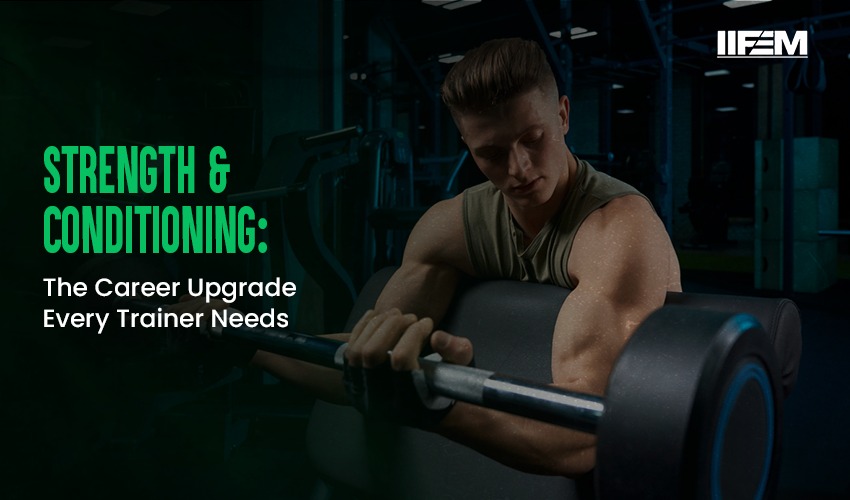
Strength and Conditioning: The Career Upgrade Every Trainer Needs
In the fitness industry, the demand for results-driven training is higher than ever. Athletes, gym-goers and clients want performance, not just workouts. This is where strength and conditioning (S&C) comes in a professional pathway that helps trainers stand out, boost expertise and deliver measurable outcomes.
Why Trainers Should Focus on Performance Training?
Traditional fitness coaching builds general health, but strength and conditioning goes beyond. It enhances power, endurance, mobility and recovery. Trainers with this skillset can train not only regular clients but also athletes who need targeted performance programs. This specialisation sets them apart in a competitive industry.
The Science Behind Strength and Conditioning
A well-structured strength and conditioning program blends biomechanics, exercise physiology and recovery science. Trainers learn to assess movement patterns, design progressive overload plans and integrate rest periods effectively. This scientific approach leads to better client retention, fewer injuries and improved athletic performance.
Expanding Career Opportunities
A certified strength and conditioning professional can work with sports academies, gyms, universities or even as an independent performance coach. The certification acts as a gateway to high-paying roles in professional sports teams and training facilities. It’s not just an upgrade; it’s a transformation in how a trainer operates.
Why Certification Matters More Than Experience Alone?
While hands-on experience is valuable, formal strength training certification adds credibility and deepens a trainer’s understanding of human performance. It proves professional competence and builds client trust. Certified trainers can also attract a more premium clientele who seek advanced results-oriented guidance.
Learning Online: Flexibility for Modern Trainers
With technology bridging education and convenience, personal trainer classes online have become the go-to choice for professionals. Online certification programs allow trainers to study while continuing their practice. They offer interactive modules, case studies and assessments designed for practical learning and immediate application.
Key Skills Developed in Strength & Conditioning Courses
These courses teach far more than lifting techniques. Trainers gain expertise in periodisation, load management, injury prevention and recovery planning. They learn to analyse athlete performance metrics and modify training intensity accordingly. This well-rounded approach ensures safe, effective and evidence-based progress for every client.
Bridging the Gap Between Fitness and Sports Science
Strength and conditioning acts as a bridge between fitness coaching and sports science. It transforms trainers into performance specialists who understand biomechanics, nutrition and psychology. Whether coaching a sprinter, a footballer or a beginner, this knowledge allows precise training tailored to individual goals.
How Strength and Conditioning Boosts Trainer Reputation?
- Trainers who use science-backed training methods earn greater trust from clients and athletes.
- Certified S&C professionals focus on measurable results like improved speed, strength, and endurance.
- Their structured, data-driven programs lead to visible performance improvements for clients.
- Proven results build strong credibility and long-term client relationships.
- This reputation attracts collaborations, sponsorships, and new career opportunities in the fitness and sports industry.
Build Your Future with IIFEM
For trainers looking to elevate their expertise, IIFEM (International Institute of Fitness Excellence and Management) provides specialised fitness education that bridges science with real-world application.
The Strength and Conditioning Course at IIFEM is designed for fitness professionals who want to master high-performance coaching. It covers biomechanics, periodisation, athletic testing, functional training and injury prevention, ensuring trainers can design programs for athletes across various sports. Participants also gain practical insights into strength assessment, load management, recovery protocols and programming for endurance and power athletes — making them capable of delivering results that stand out.
The course offers flexible online modules, certifications recognised by industry leaders and mentorship from experienced coaches, preparing trainers to work with athletes, teams, and clients globally.
In addition to this, IIFEM provides advanced programs like the Sports Nutrition Course, Advanced Personal Trainer Course and Science of Designing Training Plans, helping trainers build a complete understanding of performance, recovery and client transformation.
By combining science, skill and strategy, IIFEM empowers fitness experts to upskill, evolve, and lead confidently in the competitive fitness industry.
FAQ’S
1. What is strength and conditioning in fitness training?
Strength and conditioning involves structured exercise programs aimed at improving muscular strength, endurance, speed and overall athletic performance. It combines resistance training, functional movements and conditioning drills to enhance physical capabilities for sports or general fitness.
2. Why should trainers pursue a strength and conditioning certification?
A certification equips trainers with advanced knowledge of biomechanics, periodisation and athlete management. Certified professionals gain credibility, attract high-level clients, and open doors to sports teams, academies, and elite training programs.
3. Can strength and conditioning courses be completed online?
Yes. Many personal trainer classes online provide flexibility without compromising quality. Trainers can learn theory, programming and practical application through structured online modules, allowing them to upskill alongside their current work.
4. How does strength and conditioning improve a trainer’s career opportunities?
Trainers can work in sports academies, universities, professional teams, gyms or offer independent coaching. Certification allows them to deliver measurable results, enhancing reputation, attracting high-paying roles and creating opportunities for sponsorships or collaborations.
5. What topics are covered in a strength and conditioning program?
Programs typically include exercise science, biomechanics, injury prevention, periodisation, performance analysis, nutrition for performance and advanced strength and endurance training methods.
Category
Recent Blog

Why is insulin neede... Read more
July 05,2023
10 Tips for Strength... Read more
August 14,2023
Sample Strength and ... Read more
September 06,2023
Why are some lifters... Read more
September 15,2023
Why do Barbells and ... Read more
September 22,2023
Secret Routine to Bu... Read more
September 26,2023
When to use Insulin,... Read more
September 28,2023
Why lifters should u... Read more
September 29,2023
What is power traini... Read more
October 09,2023
The Future of Fitnes... Read more
October 17,2023
Why Pursue a Fitness... Read more
October 21,2023
Career Paths for Cer... Read more
October 31,2023
Elevating Your Perso... Read more
November 21,2023
Gym Safety Correctiv... Read more
December 26,2023
5 Different Types of... Read more
December 27,2023
Elevate Your Fitness... Read more
December 28,2023
Embark on Your Fitne... Read more
January 24,2024
Mastering Nutrition ... Read more
January 24,2024
Building Strength wi... Read more
January 27,2024
Boost Your Career: B... Read more
January 27,2024
7 main reasons why y... Read more
February 15,2024
Unlocking Essential ... Read more
February 19,2024
Unlock Your Fitness ... Read more
February 20,2024
Unveiling the Path t... Read more
February 28,2024
How to choose the ri... Read more
February 29,2024
Strengthening Weak S... Read more
March 20,2024
How a Fat Loss and E... Read more
March 27,2024
Transformative Insig... Read more
March 27,2024
The Importance of a ... Read more
April 10,2024
Mastering the Art of... Read more
April 22,2024
Unlocking Your Caree... Read more
April 23,2024
The Evolution of Per... Read more
May 27,2024
Elevate Your Fitness... Read more
May 28,2024
Choosing the Right P... Read more
June 25,2024
Role of Protein in F... Read more
June 26,2024
Career Opportunities... Read more
June 27,2024
How Fitness Certific... Read more
July 29,2024
Building a Successfu... Read more
July 30,2024
Qualities to Look fo... Read more
August 21,2024
How Gym Trainer Cert... Read more
August 28,2024
How Fitness Trainer ... Read more
September 20,2024
The Role of a Person... Read more
September 23,2024
Immunity Boosting Pl... Read more
October 17,2024
How Fitness Trainers... Read more
October 22,2024
Transform Your Fitne... Read more
October 28,2024
Certified vs. Uncert... Read more
November 22,2024
The Role of Nutritio... Read more
November 25,2024
The Importance of Co... Read more
December 28,2024
5 Powerlifting Train... Read more
December 28,2024
How Personal Trainer... Read more
January 24,2025
Essential Online Nut... Read more
January 25,2025
How Personal Trainer... Read more
January 27,2025
5 Immunity-Boosting ... Read more
March 01,2025
What to Look for in ... Read more
March 01,2025
The Impact of a Pers... Read more
March 27,2025
The Benefits of Beco... Read more
March 28,2025
How to Choose the Ri... Read more
April 24,2025
Turbo Test: Unlockin... Read more
April 25,2025
How to Build a Perfe... Read more
April 29,2025
10 Powerful Yoga Asa... Read more
May 24,2025
How to Track Your Ca... Read more
May 26,2025
Fast-Track Your Fitn... Read more
May 28,2025
Top Career Paths You... Read more
May 29,2025
10 Reasons to Enroll... Read more
June 23,2025
How to Turn Your Pas... Read more
June 28,2025
Trainer vs Coach Wha... Read more
June 30,2025
How IIFEM Plans to C... Read more
July 01,2025
Go Global with IIFEM... Read more
July 11,2025
How to Avoid the Top... Read more
July 22,2025
No English No Proble... Read more
July 25,2025
How Education Can El... Read more
August 19,2025
Real Stories from II... Read more
August 20,2025
Why Gym Owners Prefe... Read more
August 26,2025
How Science Based Tr... Read more
August 31,2025
Why an International... Read more
September 10,2025
What Makes IIFEM the... Read more
September 15,2025
How to Build a Succe... Read more
September 22,2025
Your Passion and Our... Read more
September 27,2025
Fat Loss & Endurance... Read more
October 16,2025
Benefits of Whey Pro... Read more
October 21,2025
From Trainer to Gym ... Read more
October 29,2025
Powerlifting Trainin... Read more
November 12,2025
Pre-Workout vs Post-... Read more
November 17,2025
Building a Hybrid Fi... Read more
November 19,2025
Why Most Weight Loss... Read more
November 21,2025
Why Great Coaches Do... Read more
December 18,2025
Integrating Yoga for... Read more
December 18,2025
From Fitness Coach t... Read more
December 18,2025
Personal Trainers Sa... Read more
January 16,2026
Diploma in Fitness T... Read more
January 16,2026
Join Gym Training Co... Read more
February 10,2026
How to Become a Cert... Read more
February 10,2026
How a Certified Pers... Read more
February 18,2026
Turning Your Certifi... Read more
February 18,2026
Confused About Certi... Read more
March 14,2026
Turning Fitness Enth... Read more
March 14,2026
The Personal Trainer... Read more
March 14,2026
Building Authority i... Read more
March 18,2026
Top Fitness Skills E... Read more
April 10,2026
How IIFEM Certificat... Read more
April 15,2026
Thinking of Becoming... Read more
April 22,2026
Why Certified Fitnes... Read more
April 29,2026
Top 5 Gym Trainer Co... Read more
May 08,2026
Choose the Top Perso... Read more
May 15,2026
Become Top Physical ... Read more
May 16,2026
Online Diploma in Fi... Read more
May 21,2026
Best Gym Trainer Cer... Read more
June 10,2026
How to Become a Cert... Read more
June 08,2026
How to Become a Cert... Read more
June 11,2026
Top Career Opportuni... Read more
June 08,2026
Why the Fitness Indu... Read more
July 16,2026
How to Start Your Ca... Read more
July 18,2026
Why Online Certifica... Read more
July 26,2026
Want to Become a Cer... Read more
July 28,2026
Why Personal Trainer... Read more
August 10,2026
How to Choose the Ri... Read more
August 15,2026
What to Expect from ... Read more
August 25,2026
What Makes a Perfect... Read more
August 22,2026
How to Become a Cert... Read more
September 09,2026
Get Certified in Gym... Read more
September 11,2026
Certified Fitness Tr... Read more
September 16,2026
How to Design Workou... Read more
September 25,2026
Strength & Condition... Read more
October 05,2026Trainer to Master Tr... Read more
October 08,2026Diet Management Cour... Read more
October 11,2026
Corrective Exercise ... Read more
October 15,2026