The Importance of Corrective Exercise in Fitness Training
In the world of fitness training, corrective exercise plays a crucial role in improving performance, preventing injury, and enhancing overall well-being. According to the study 27% people in the gym experience injuries (African Journal of Biological Sciences). Often overlooked, corrective exercises are designed to address muscular imbalances, poor posture, and movement dysfunctions that can hinder progress in the gym. Incorporating these exercises into your routine can lead to better alignment, reduced pain, and greater physical efficiency.
What is Corrective Exercise?
Corrective exercise is a specialized form of physical activity aimed at correcting postural and movement imbalances. These exercises target specific areas of the body where imbalances or weaknesses occur and are designed to restore proper function and alignment. For example, corrective exercise specialist can help improve joint stability, activate underused muscles, and lengthen tight muscles to create a balanced, functional body.
Why Corrective Exercise Matters in Fitness Training
- Prevents Injury
Injuries often stem from poor movement patterns, tight muscles, or imbalances in muscle strength. By incorporating corrective exercise in fitness training, individuals can address these issues before they result in injury. For example, exercises targeting weak glutes and tight hip flexors can reduce the risk of lower back pain or knee injuries, common problems faced by gym-goers.
- Improves Posture
Good posture is foundational to overall health and fitness. Many individuals unknowingly develop poor posture due to prolonged sitting or repetitive movement patterns. Gym exercises to improve posture focus on strengthening the muscles responsible for maintaining proper spinal alignment. This can lead to fewer aches and pains, enhanced breathing, and greater energy levels throughout the day.
- Enhances Performance
Corrective exercises are not just about fixing problems – they also help improve overall performance. When the body moves efficiently and is free from dysfunction, the individual can perform exercises more effectively and with better form. This translates into faster progress and a reduced risk of setbacks. For instance, strengthening the rotator cuff muscles can enhance shoulder stability, allowing for better form in overhead lifts.
- Restores Proper Movement Patterns
Sometimes, we develop bad habits that can affect how we move, especially when performing exercises at the gym. For example, rounded shoulders or misaligned knees during squats can become habitual and lead to long-term issues. Corrective exercise focuses on restoring proper movement patterns to ensure the body is performing exercises correctly. This results in a more efficient workout, maximizing the benefits of every session.
How to Incorporate Corrective Exercise into Your Routine
To get the most out of corrective exercise for the gym, it’s essential to first identify any weaknesses or imbalances through a physical assessment. From there, targeted exercises can be added to your workout to correct these issues. These exercises might include stretching tight muscles, strengthening weak muscles, or working on mobility and flexibility.
For example, if poor posture is an issue, you might incorporate exercises like scapular retractions, chest openers, or core strengthening exercises. If your knees tend to cave in during squats, focusing on strengthening your glutes and hip abductors will help prevent that.
Incorporating Corrective Exercises with IIFEM
IIFEM (International Institute of Fitness Excellence and Management) emphasizes the importance of corrective exercise in online fitness training as a key component of any well-rounded workout program. Their gym trainer courses and resources provide comprehensive instruction on how to identify and correct movement dysfunctions, helping clients achieve optimal performance while minimizing the risk of injury. Whether beginners or seasoned athletes, individuals can benefit from expert guidance at IIFEM to enhance their training with effective corrective exercises.
In addition to corrective exercise courses, IIFEM offers a range of other specialized fitness programs, including strength and conditioning course, personal trainer certification, and online gym trainer course. These courses are designed to provide both theoretical knowledge and practical skills needed to excel in the fitness industry. Whether someone is looking to become a certified personal trainer, enhance their expertise, or learn advanced training techniques, IIFEM has a course tailored to their needs.
Faqs
1. What is corrective exercise and why is it important?
Corrective exercise targets postural issues, muscular imbalances, and faulty movement patterns. It helps restore proper function, reduces pain, and improves performance. At IIFEM, trainers learn to design corrective routines that support long-term health and fitness success.
2. Can corrective exercises really prevent gym injuries?
Yes. Most gym injuries result from poor movement patterns, tight muscles, or weak stabilizers. Corrective exercise strengthens weak areas and restores alignment. IIFEM teaches trainers to identify risks early, helping clients train safely and effectively.
3. How does corrective exercise improve posture?
Corrective workouts strengthen postural muscles and release tight areas caused by sitting or repetitive movements. Improved posture reduces back pain, enhances breathing, and boosts energy. IIFEM integrates posture-focused training into its fitness programs for lasting results.
4. Will corrective exercise also enhance my athletic performance?
Absolutely. When the body moves efficiently, lifts feel smoother, form improves, and performance increases. IIFEM’s corrective training modules help athletes strengthen weak points, ensuring consistent progress without setbacks or injuries.
5. Do beginners need corrective exercise, or only advanced lifters?
Everyone benefits. Beginners prevent poor habits, while experienced lifters correct existing imbalances. IIFEM emphasizes corrective exercise in all levels of its courses, ensuring trainers can guide clients toward safe and effective movement patterns.
Category
Recent Blog

Why is insulin neede... Read more
July 05,2023
10 Tips for Strength... Read more
August 14,2023
Sample Strength and ... Read more
September 06,2023
Why are some lifters... Read more
September 15,2023
Why do Barbells and ... Read more
September 22,2023
Secret Routine to Bu... Read more
September 26,2023
When to use Insulin,... Read more
September 28,2023
Why lifters should u... Read more
September 29,2023
What is power traini... Read more
October 09,2023
The Future of Fitnes... Read more
October 17,2023
Why Pursue a Fitness... Read more
October 21,2023
Career Paths for Cer... Read more
October 31,2023
Elevating Your Perso... Read more
November 21,2023
Gym Safety Correctiv... Read more
December 26,2023
5 Different Types of... Read more
December 27,2023
Elevate Your Fitness... Read more
December 28,2023
Embark on Your Fitne... Read more
January 24,2024
Mastering Nutrition ... Read more
January 24,2024
Building Strength wi... Read more
January 27,2024
Boost Your Career: B... Read more
January 27,2024
7 main reasons why y... Read more
February 15,2024
Unlocking Essential ... Read more
February 19,2024
Unlock Your Fitness ... Read more
February 20,2024
Unveiling the Path t... Read more
February 28,2024
How to choose the ri... Read more
February 29,2024
Strengthening Weak S... Read more
March 20,2024
How a Fat Loss and E... Read more
March 27,2024
Transformative Insig... Read more
March 27,2024
The Importance of a ... Read more
April 10,2024
Mastering the Art of... Read more
April 22,2024
Unlocking Your Caree... Read more
April 23,2024
The Evolution of Per... Read more
May 27,2024
Elevate Your Fitness... Read more
May 28,2024
Choosing the Right P... Read more
June 25,2024
Role of Protein in F... Read more
June 26,2024
Career Opportunities... Read more
June 27,2024
How Fitness Certific... Read more
July 29,2024
Building a Successfu... Read more
July 30,2024
Qualities to Look fo... Read more
August 21,2024
How Gym Trainer Cert... Read more
August 28,2024
How Fitness Trainer ... Read more
September 20,2024
The Role of a Person... Read more
September 23,2024
Immunity Boosting Pl... Read more
October 17,2024
How Fitness Trainers... Read more
October 22,2024
Transform Your Fitne... Read more
October 28,2024
Certified vs. Uncert... Read more
November 22,2024
The Role of Nutritio... Read more
November 25,2024
5 Powerlifting Train... Read more
December 28,2024
How Personal Trainer... Read more
January 24,2025
Essential Online Nut... Read more
January 25,2025
How Personal Trainer... Read more
January 27,2025
5 Immunity-Boosting ... Read more
March 01,2025
What to Look for in ... Read more
March 01,2025
The Impact of a Pers... Read more
March 27,2025
The Benefits of Beco... Read more
March 28,2025
How to Choose the Ri... Read more
April 24,2025
Turbo Test: Unlockin... Read more
April 25,2025
How to Build a Perfe... Read more
April 29,2025
10 Powerful Yoga Asa... Read more
May 24,2025
How to Track Your Ca... Read more
May 26,2025
Fast-Track Your Fitn... Read more
May 28,2025
Top Career Paths You... Read more
May 29,2025
10 Reasons to Enroll... Read more
June 23,2025
How to Turn Your Pas... Read more
June 28,2025
Trainer vs Coach Wha... Read more
June 30,2025
How IIFEM Plans to C... Read more
July 01,2025
Go Global with IIFEM... Read more
July 11,2025
How to Avoid the Top... Read more
July 22,2025
No English No Proble... Read more
July 25,2025
How Education Can El... Read more
August 19,2025
Real Stories from II... Read more
August 20,2025
Why Gym Owners Prefe... Read more
August 26,2025
How Science Based Tr... Read more
August 31,2025
Why an International... Read more
September 10,2025
What Makes IIFEM the... Read more
September 15,2025
How to Build a Succe... Read more
September 22,2025
Your Passion and Our... Read more
September 27,2025
Fat Loss & Endurance... Read more
October 16,2025
Benefits of Whey Pro... Read more
October 21,2025
Strength and Conditi... Read more
October 27,2025
From Trainer to Gym ... Read more
October 29,2025
Powerlifting Trainin... Read more
November 12,2025
Pre-Workout vs Post-... Read more
November 17,2025
Building a Hybrid Fi... Read more
November 19,2025
Why Most Weight Loss... Read more
November 21,2025
Why Great Coaches Do... Read more
December 18,2025
Integrating Yoga for... Read more
December 18,2025
From Fitness Coach t... Read more
December 18,2025
Personal Trainers Sa... Read more
January 16,2026
Diploma in Fitness T... Read more
January 16,2026
Join Gym Training Co... Read more
February 10,2026
How to Become a Cert... Read more
February 10,2026
How a Certified Pers... Read more
February 18,2026
Turning Your Certifi... Read more
February 18,2026
Confused About Certi... Read more
March 14,2026
Turning Fitness Enth... Read more
March 14,2026
The Personal Trainer... Read more
March 14,2026
Building Authority i... Read more
March 18,2026
Top Fitness Skills E... Read more
April 10,2026
How IIFEM Certificat... Read more
April 15,2026
Thinking of Becoming... Read more
April 22,2026
Why Certified Fitnes... Read more
April 29,2026
Top 5 Gym Trainer Co... Read more
May 08,2026
Choose the Top Perso... Read more
May 15,2026
Become Top Physical ... Read more
May 16,2026
Online Diploma in Fi... Read more
May 21,2026
Best Gym Trainer Cer... Read more
June 10,2026
How to Become a Cert... Read more
June 08,2026
How to Become a Cert... Read more
June 11,2026
Top Career Opportuni... Read more
June 08,2026
Why the Fitness Indu... Read more
July 16,2026
How to Start Your Ca... Read more
July 18,2026
Why Online Certifica... Read more
July 26,2026
Want to Become a Cer... Read more
July 28,2026
Why Personal Trainer... Read more
August 10,2026
How to Choose the Ri... Read more
August 15,2026
What to Expect from ... Read more
August 25,2026
What Makes a Perfect... Read more
August 22,2026
How to Become a Cert... Read more
September 09,2026
Get Certified in Gym... Read more
September 11,2026
Certified Fitness Tr... Read more
September 16,2026
How to Design Workou... Read more
September 25,2026
Strength & Condition... Read more
October 05,2026Trainer to Master Tr... Read more
October 08,2026Diet Management Cour... Read more
October 11,2026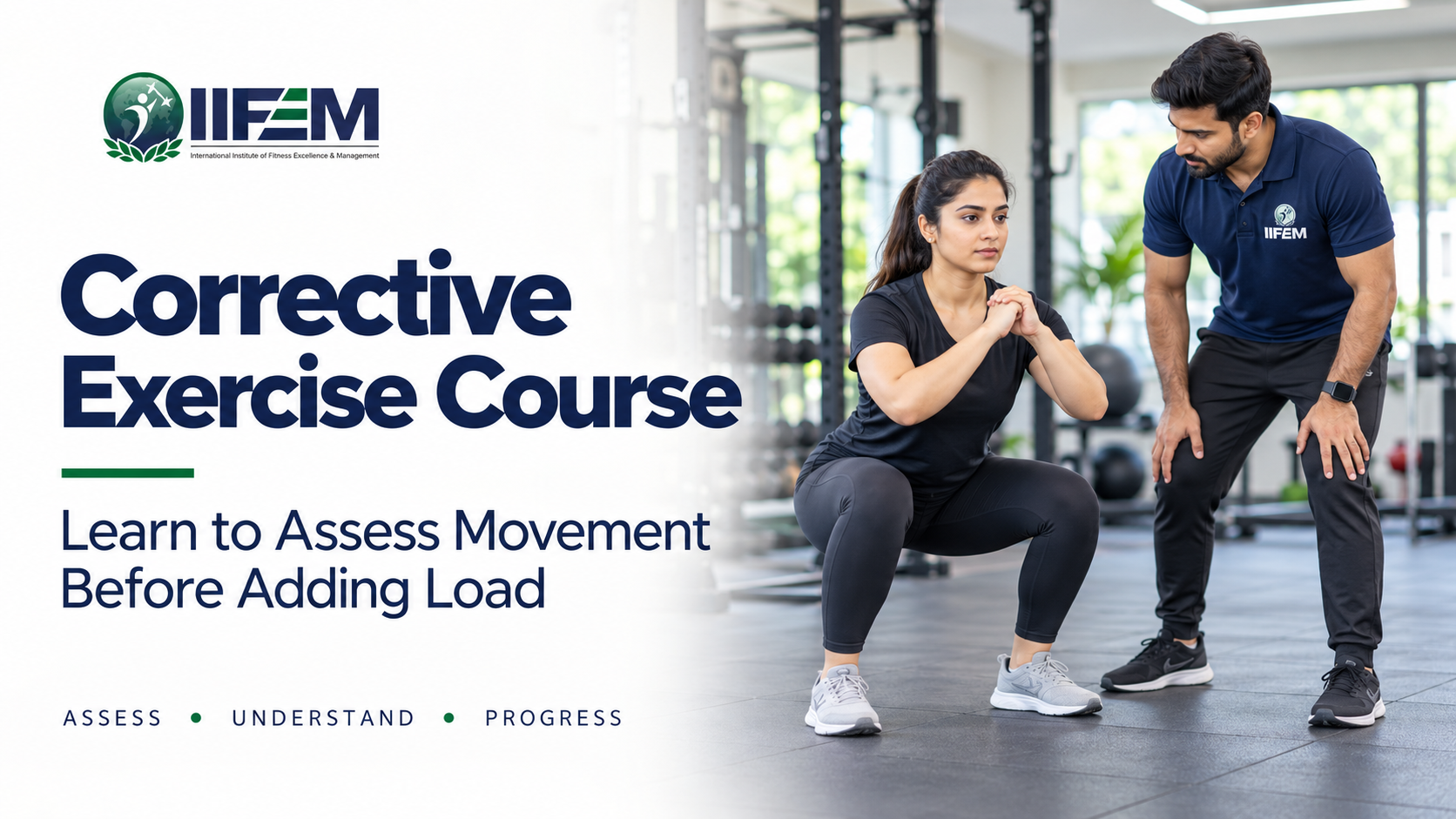
Corrective Exercise ... Read more
October 15,2026