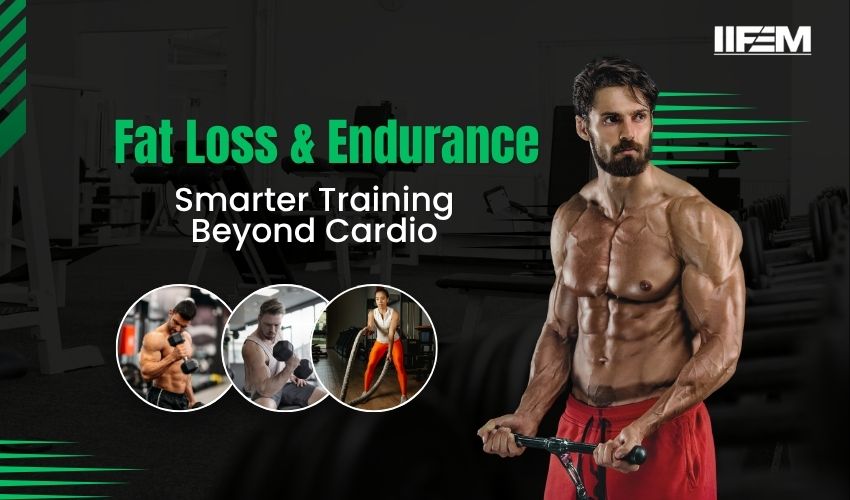
Fat Loss & Endurance: Smarter Training Beyond Cardio
When people think of fat loss training, the first thing that comes to mind is endless hours on the treadmill. While cardio has its place, it’s no longer the only route to achieve lasting results. Modern trainers are shifting towards smarter, more balanced approaches that combine endurance, strength and recovery for better fat-burning efficiency and improved performance.
Why Cardio Alone Isn’t Enough?
Cardio helps burn calories, but relying on it completely can lead to a plateau. When the body adapts, calorie burn reduces, making it harder to lose weight. Adding strength and endurance training helps maintain lean muscle mass, which in turn keeps metabolism active even on rest days or while you rest. Today Trainers focus on combining workouts to lose weight with resistance-based routines that deliver sustainable results.
Building Strength for Better Fat Loss
Strength training is a game changer in fat loss training. By working on multiple muscle groups through squats, deadlifts and push-ups, the body continues burning calories long after the workout ends. This process, known as excess post-exercise oxygen consumption (EPOC), is why a well-structured weight loss workout plan often includes strength sessions 3–4 times a week.
Endurance Training for Performance and Stamina
Endurance training isn’t just about running long distances. It’s about improving the body’s ability to sustain effort over time: whether it’s through circuit workouts, high-rep training, or interval sessions. Combining endurance and resistance helps trainers create adaptable programmes that improve cardiovascular health while enhancing muscular endurance. This mix boosts overall athletic performance and makes fat loss more efficient.
Workouts That Target Belly Fat
Spot reduction is a myth, but well-designed workouts to lose belly fat can help reduce overall body fat while strengthening the core. Movements such as planks, mountain climbers, kettlebell swings and burpees engage multiple muscle groups, increasing calorie expenditure. Trainers often pair these with compound lifts and short rest intervals to accelerate fat burning across the body.
Smart Training Split for Weight Loss and Endurance
An effective weight loss workout plan doesn’t require daily intensity; it requires structure. A smart weekly split could include:
- 2 days of strength training (upper and lower body focus)
- 2 days of endurance-based circuits or HIIT
- 1 active recovery day (yoga or mobility work)
This balance allows the body to recover, preventing overtraining while keeping energy levels high. Trainers can modify intensity based on client experience and goals.
Nutrition: The Foundation of Fat Loss
Even the most advanced workout plan can’t outperform poor nutrition. Trainers who educate clients on calorie balance, macronutrient distribution and hydration help them achieve faster and more sustainable results. Pairing endurance and strength workouts with a well-structured nutrition plan supports fat loss while preserving muscle mass - the ultimate goal for long-term transformation.
The Role of Strength and Endurance Synergy
Strength and endurance training work hand in hand. While strength improves power and lean mass, endurance training enhances energy efficiency. Together, they form the foundation of high-performance fitness. Trainers who understand how to blend these disciplines can help clients achieve better aesthetics, stamina and overall functionality.
Progress Tracking and Adjustments
Every trainer knows that progress depends on consistency and adaptation. Regularly measuring body composition, endurance levels and strength improvements ensures clients stay on track. Making small changes like increasing weights, reducing rest periods, or varying intensity keeps the body challenged and results steady.
Smarter Recovery for Sustainable Results
Recovery is often overlooked, but it’s one of the most crucial aspects of any training programme. Quality sleep, mobility work and deload weeks allow muscles to repair and grow stronger. Trainers who emphasise recovery alongside training create long-term adherence and reduce injury risks for their clients.
Train Smarter with IIFEM
For trainers looking to advance their expertise, IIFEM offers science-driven online fitness education designed for real-world application. Our Strength and Conditioning Course provides in-depth knowledge of performance programming, recovery strategies and athlete development. This is perfect for those who want to build a career in performance coaching.
In addition, the Sports Nutrition Course helps trainers design diet plans that align with fat loss and endurance goals, while the Personal Trainer Course builds confidence in creating tailored weight loss workout plans for clients at every level.
By combining theory, practice and mentorship, IIFEM’s fitness training courses empower professionals to train smarter, coach effectively and transform client outcomes. Whether your goal is to specialise in fat loss training or endurance development, IIFEM helps you turn passion into a lasting career in fitness.
FAQ’S
1. What is the best type of fat loss training?
The best fat loss training combines strength and endurance exercises. This mix helps build lean muscle, increase metabolism and improve stamina, leading to sustainable weight loss instead of quick but temporary results.
2. Can endurance training help with fat loss?
Yes. Endurance training improves cardiovascular health and calorie burn. When combined with resistance work, it enhances fat metabolism and maintains lean muscle, making it an effective part of any structured weight loss workout plan.
3. How often should you train for fat loss?
Most trainers recommend 4–5 sessions per week. This includes strength workouts, endurance circuits and active recovery days. Consistency and progression are more effective for long-term fat loss than daily high-intensity workouts.
4. What are the best workouts to lose belly fat?
Planks, mountain climbers, kettlebell swings and compound lifts like squats and deadlifts are great for losing belly fat. They engage multiple muscle groups, increase calorie burn and strengthen the core.
5. Is strength training better than cardio for weight loss?
Strength training builds muscle, which increases resting metabolism, while cardio burns calories during exercise. Combining both creates a balanced, sustainable fat loss training approach that supports body composition and endurance.
Category
Recent Blog

Why is insulin neede... Read more
July 05,2023
10 Tips for Strength... Read more
August 14,2023
Sample Strength and ... Read more
September 06,2023
Why are some lifters... Read more
September 15,2023
Why do Barbells and ... Read more
September 22,2023
Secret Routine to Bu... Read more
September 26,2023
When to use Insulin,... Read more
September 28,2023
Why lifters should u... Read more
September 29,2023
What is power traini... Read more
October 09,2023
The Future of Fitnes... Read more
October 17,2023
Why Pursue a Fitness... Read more
October 21,2023
Career Paths for Cer... Read more
October 31,2023
Elevating Your Perso... Read more
November 21,2023
Gym Safety Correctiv... Read more
December 26,2023
5 Different Types of... Read more
December 27,2023
Elevate Your Fitness... Read more
December 28,2023
Embark on Your Fitne... Read more
January 24,2024
Mastering Nutrition ... Read more
January 24,2024
Building Strength wi... Read more
January 27,2024
Boost Your Career: B... Read more
January 27,2024
7 main reasons why y... Read more
February 15,2024
Unlocking Essential ... Read more
February 19,2024
Unlock Your Fitness ... Read more
February 20,2024
Unveiling the Path t... Read more
February 28,2024
How to choose the ri... Read more
February 29,2024
Strengthening Weak S... Read more
March 20,2024
How a Fat Loss and E... Read more
March 27,2024
Transformative Insig... Read more
March 27,2024
The Importance of a ... Read more
April 10,2024
Mastering the Art of... Read more
April 22,2024
Unlocking Your Caree... Read more
April 23,2024
The Evolution of Per... Read more
May 27,2024
Elevate Your Fitness... Read more
May 28,2024
Choosing the Right P... Read more
June 25,2024
Role of Protein in F... Read more
June 26,2024
Career Opportunities... Read more
June 27,2024
How Fitness Certific... Read more
July 29,2024
Building a Successfu... Read more
July 30,2024
Qualities to Look fo... Read more
August 21,2024
How Gym Trainer Cert... Read more
August 28,2024
How Fitness Trainer ... Read more
September 20,2024
The Role of a Person... Read more
September 23,2024
Immunity Boosting Pl... Read more
October 17,2024
How Fitness Trainers... Read more
October 22,2024
Transform Your Fitne... Read more
October 28,2024
Certified vs. Uncert... Read more
November 22,2024
The Role of Nutritio... Read more
November 25,2024
The Importance of Co... Read more
December 28,2024
5 Powerlifting Train... Read more
December 28,2024
How Personal Trainer... Read more
January 24,2025
Essential Online Nut... Read more
January 25,2025
How Personal Trainer... Read more
January 27,2025
5 Immunity-Boosting ... Read more
March 01,2025
What to Look for in ... Read more
March 01,2025
The Impact of a Pers... Read more
March 27,2025
The Benefits of Beco... Read more
March 28,2025
How to Choose the Ri... Read more
April 24,2025
Turbo Test: Unlockin... Read more
April 25,2025
How to Build a Perfe... Read more
April 29,2025
10 Powerful Yoga Asa... Read more
May 24,2025
How to Track Your Ca... Read more
May 26,2025
Fast-Track Your Fitn... Read more
May 28,2025
Top Career Paths You... Read more
May 29,2025
10 Reasons to Enroll... Read more
June 23,2025
How to Turn Your Pas... Read more
June 28,2025
Trainer vs Coach Wha... Read more
June 30,2025
How IIFEM Plans to C... Read more
July 01,2025
Go Global with IIFEM... Read more
July 11,2025
How to Avoid the Top... Read more
July 22,2025
No English No Proble... Read more
July 25,2025
How Education Can El... Read more
August 19,2025
Real Stories from II... Read more
August 20,2025
Why Gym Owners Prefe... Read more
August 26,2025
How Science Based Tr... Read more
August 31,2025
Why an International... Read more
September 10,2025
What Makes IIFEM the... Read more
September 15,2025
How to Build a Succe... Read more
September 22,2025
Your Passion and Our... Read more
September 27,2025
Benefits of Whey Pro... Read more
October 21,2025
Strength and Conditi... Read more
October 27,2025
From Trainer to Gym ... Read more
October 29,2025
Powerlifting Trainin... Read more
November 12,2025
Pre-Workout vs Post-... Read more
November 17,2025
Building a Hybrid Fi... Read more
November 19,2025
Why Most Weight Loss... Read more
November 21,2025
Why Great Coaches Do... Read more
December 18,2025
Integrating Yoga for... Read more
December 18,2025
From Fitness Coach t... Read more
December 18,2025
Personal Trainers Sa... Read more
January 16,2026
Diploma in Fitness T... Read more
January 16,2026
Join Gym Training Co... Read more
February 10,2026
How to Become a Cert... Read more
February 10,2026
How a Certified Pers... Read more
February 18,2026
Turning Your Certifi... Read more
February 18,2026
Confused About Certi... Read more
March 14,2026
Turning Fitness Enth... Read more
March 14,2026
The Personal Trainer... Read more
March 14,2026
Building Authority i... Read more
March 18,2026
Top Fitness Skills E... Read more
April 10,2026
How IIFEM Certificat... Read more
April 15,2026
Thinking of Becoming... Read more
April 22,2026
Why Certified Fitnes... Read more
April 29,2026
Top 5 Gym Trainer Co... Read more
May 08,2026
Choose the Top Perso... Read more
May 15,2026
Become Top Physical ... Read more
May 16,2026
Online Diploma in Fi... Read more
May 21,2026
Best Gym Trainer Cer... Read more
June 10,2026
How to Become a Cert... Read more
June 08,2026
How to Become a Cert... Read more
June 11,2026
Top Career Opportuni... Read more
June 08,2026
Why the Fitness Indu... Read more
July 16,2026
How to Start Your Ca... Read more
July 18,2026
Why Online Certifica... Read more
July 26,2026
Want to Become a Cer... Read more
July 28,2026
Why Personal Trainer... Read more
August 10,2026
How to Choose the Ri... Read more
August 15,2026
What to Expect from ... Read more
August 25,2026
What Makes a Perfect... Read more
August 22,2026
How to Become a Cert... Read more
September 09,2026
Get Certified in Gym... Read more
September 11,2026
Certified Fitness Tr... Read more
September 16,2026
How to Design Workou... Read more
September 25,2026
Strength & Condition... Read more
October 05,2026Trainer to Master Tr... Read more
October 08,2026Diet Management Cour... Read more
October 11,2026
Corrective Exercise ... Read more
October 15,2026