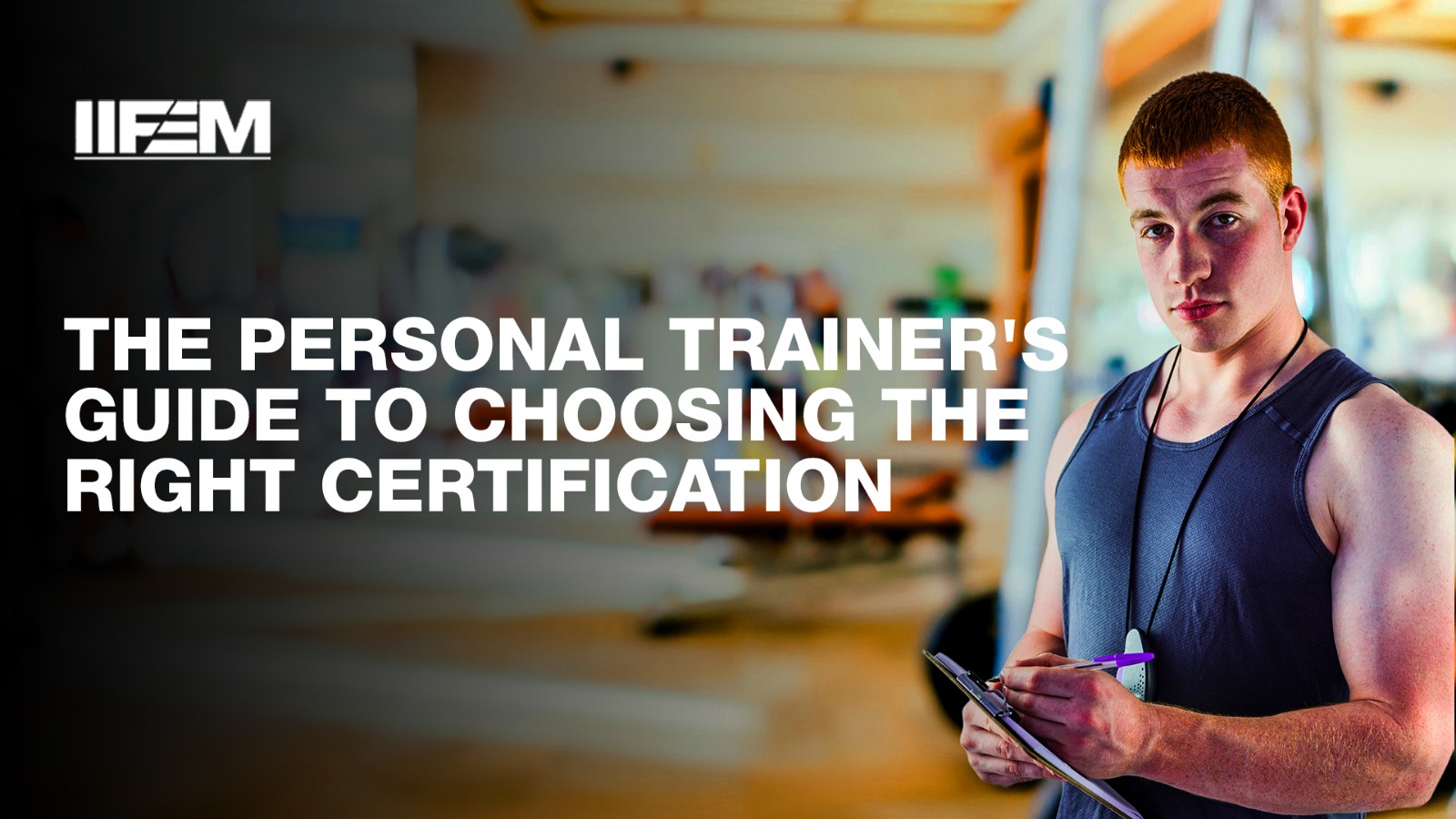
The Personal Trainer's Guide to Choosing the Right Certification
Becoming a personal fitness trainer begins with passion, but long-term success depends on choosing the right certification. With many programs available today, trainers often feel confused about which path to follow. The right education shapes your coaching skills, career opportunities and professional credibility from the very beginning.
Understand Your Career Goal First
Before enrolling in any certified fitness trainer course online, define what type of trainer you want to become. Do you plan to work in a gym, run your own studio, coach athletes, or train clients online? Your goal determines the depth and focus of your education. Clarity at this stage prevents wasted time and helps you select a program that matches your ambitions.
Check Course Curriculum and Practical Focus
A strong certification program should cover anatomy, exercise technique, program design, client assessment and injury prevention. Practical exposure matters as much as theory. Look for personal trainer classes that include real-life coaching examples, case studies and movement correction practice. Learning only from textbooks limits your ability to coach confidently.
Look for Industry Recognition
Recognition improves employment opportunities. Gyms and fitness studios prefer trainers who hold certifications from respected institutes. A well-structured physical trainer course backed by an established organisation signals professionalism and structured knowledge. This credibility builds trust with both employers and clients.
Evaluate Learning Format and Flexibility
Some trainers prefer classroom education, while others need online options due to work commitments. Many fitness trainer course providers now offer flexible learning formats with recorded sessions and digital resources. Choose a structure that allows consistent learning without overwhelming your schedule.
Compare Beginner and Advanced Pathways
Not all certifications are suitable for every level. Beginners should start with foundational programs that build movement knowledge and coaching basics. Advanced trainers may look for specialisations in strength training, sports performance, or nutrition. A clear progression pathway supports long-term professional growth.
Consider Career Support and Growth Opportunities
Some certification providers offer career guidance, internship support, or placement assistance. While certification builds knowledge, career guidance helps apply that knowledge professionally. Trainers who receive structured career direction often transition into the industry more smoothly.
Understand the Value Beyond Certification
Certification is not just a document; it represents structured knowledge and professional discipline. A personal fitness trainer course who understands training logic, recovery cycles and client psychology stands apart from those who rely only on trends. The right course builds confidence, credibility and clarity.
Research Reviews and Alumni Feedback
Before enrolling, research feedback from past students. Honest testimonials often reveal teaching quality, practical exposure and career impact. Speaking to alumni or reading verified reviews helps you avoid programs that promise quick results without delivering depth.
Balance Cost With Long-Term Return
Low-cost courses may appear attractive, but quality education requires investment. Instead of focusing only on price, consider long-term return. A recognised physical trainer course that improves coaching quality can lead to higher earning potential and stronger client retention over time.
Make an Informed Final Decision
After comparing the curriculum, recognition, flexibility, and career support, choose the certification that aligns with your professional direction. The right program builds a strong foundation for growth and prepares you for evolving industry expectations.
Choosing wisely at the beginning of your journey saves years of confusion later. The right fitness trainer course equips you with structured knowledge, practical skills and professional credibility. For any aspiring personal fitness trainer, certification is not just the first step; it defines the path ahead.
For trainers looking for a trusted and industry-focused option, IIFEM (International Institute of Fitness Excellence and Management) stands out as a reliable choice. With structured fitness trainer courses, practical learning modules, flexible study formats, and recognised certifications, IIFEM supports trainers from foundational learning to advanced career growth. Selecting the right institute can shape your future and IIFEM provides the clarity, depth and professional direction needed to build a successful fitness career.
FAQ’S
1. How do I choose the right fitness trainer course?
Choose a fitness trainer course based on your career goals, course curriculum, practical training exposure and industry recognition. Look for programs that cover anatomy, exercise science, client assessment and program design rather than short-term theory-only certifications.
2. What qualifications are required to become a personal fitness trainer?
Most entry-level programs require basic education and interest in fitness. A recognised certification helps you work professionally in gyms, studios, or as an independent trainer. Advanced certifications may require prior training experience.
3. Is a physical trainer course necessary to work in a gym?
Many gyms prefer certified trainers because certification proves knowledge of safe exercise techniques and structured programming. While some gyms may hire without certification, professional credentials improve credibility and job prospects.
4. What should personal trainer classes include?
Personal trainer classes should include practical coaching skills, anatomy basics, injury-prevention methods, client-communication training and structured program planning. Real-life case studies and movement correction practice are important components.
5. How long does it take to complete a fitness trainer course?
Most fitness trainer courses take a few months to complete, depending on the study format. Online options offer flexible learning schedules, while classroom programs may follow fixed timelines.
Category
Recent Blog

Why is insulin neede... Read more
July 05,2023
10 Tips for Strength... Read more
August 14,2023
Sample Strength and ... Read more
September 06,2023
Why are some lifters... Read more
September 15,2023
Why do Barbells and ... Read more
September 22,2023
Secret Routine to Bu... Read more
September 26,2023
When to use Insulin,... Read more
September 28,2023
Why lifters should u... Read more
September 29,2023
What is power traini... Read more
October 09,2023
The Future of Fitnes... Read more
October 17,2023
Why Pursue a Fitness... Read more
October 21,2023
Career Paths for Cer... Read more
October 31,2023
Elevating Your Perso... Read more
November 21,2023
Gym Safety Correctiv... Read more
December 26,2023
5 Different Types of... Read more
December 27,2023
Elevate Your Fitness... Read more
December 28,2023
Embark on Your Fitne... Read more
January 24,2024
Mastering Nutrition ... Read more
January 24,2024
Building Strength wi... Read more
January 27,2024
Boost Your Career: B... Read more
January 27,2024
7 main reasons why y... Read more
February 15,2024
Unlocking Essential ... Read more
February 19,2024
Unlock Your Fitness ... Read more
February 20,2024
Unveiling the Path t... Read more
February 28,2024
How to choose the ri... Read more
February 29,2024
Strengthening Weak S... Read more
March 20,2024
How a Fat Loss and E... Read more
March 27,2024
Transformative Insig... Read more
March 27,2024
The Importance of a ... Read more
April 10,2024
Mastering the Art of... Read more
April 22,2024
Unlocking Your Caree... Read more
April 23,2024
The Evolution of Per... Read more
May 27,2024
Elevate Your Fitness... Read more
May 28,2024
Choosing the Right P... Read more
June 25,2024
Role of Protein in F... Read more
June 26,2024
Career Opportunities... Read more
June 27,2024
How Fitness Certific... Read more
July 29,2024
Building a Successfu... Read more
July 30,2024
Qualities to Look fo... Read more
August 21,2024
How Gym Trainer Cert... Read more
August 28,2024
How Fitness Trainer ... Read more
September 20,2024
The Role of a Person... Read more
September 23,2024
Immunity Boosting Pl... Read more
October 17,2024
How Fitness Trainers... Read more
October 22,2024
Transform Your Fitne... Read more
October 28,2024
Certified vs. Uncert... Read more
November 22,2024
The Role of Nutritio... Read more
November 25,2024
The Importance of Co... Read more
December 28,2024
5 Powerlifting Train... Read more
December 28,2024
How Personal Trainer... Read more
January 24,2025
Essential Online Nut... Read more
January 25,2025
How Personal Trainer... Read more
January 27,2025
5 Immunity-Boosting ... Read more
March 01,2025
What to Look for in ... Read more
March 01,2025
The Impact of a Pers... Read more
March 27,2025
The Benefits of Beco... Read more
March 28,2025
How to Choose the Ri... Read more
April 24,2025
Turbo Test: Unlockin... Read more
April 25,2025
How to Build a Perfe... Read more
April 29,2025
10 Powerful Yoga Asa... Read more
May 24,2025
How to Track Your Ca... Read more
May 26,2025
Fast-Track Your Fitn... Read more
May 28,2025
Top Career Paths You... Read more
May 29,2025
10 Reasons to Enroll... Read more
June 23,2025
How to Turn Your Pas... Read more
June 28,2025
Trainer vs Coach Wha... Read more
June 30,2025
How IIFEM Plans to C... Read more
July 01,2025
Go Global with IIFEM... Read more
July 11,2025
How to Avoid the Top... Read more
July 22,2025
No English No Proble... Read more
July 25,2025
How Education Can El... Read more
August 19,2025
Real Stories from II... Read more
August 20,2025
Why Gym Owners Prefe... Read more
August 26,2025
How Science Based Tr... Read more
August 31,2025
Why an International... Read more
September 10,2025
What Makes IIFEM the... Read more
September 15,2025
How to Build a Succe... Read more
September 22,2025
Your Passion and Our... Read more
September 27,2025
Fat Loss & Endurance... Read more
October 16,2025
Benefits of Whey Pro... Read more
October 21,2025
Strength and Conditi... Read more
October 27,2025
From Trainer to Gym ... Read more
October 29,2025
Powerlifting Trainin... Read more
November 12,2025
Pre-Workout vs Post-... Read more
November 17,2025
Building a Hybrid Fi... Read more
November 19,2025
Why Most Weight Loss... Read more
November 21,2025
Why Great Coaches Do... Read more
December 18,2025
Integrating Yoga for... Read more
December 18,2025
From Fitness Coach t... Read more
December 18,2025
Personal Trainers Sa... Read more
January 16,2026
Diploma in Fitness T... Read more
January 16,2026
Join Gym Training Co... Read more
February 10,2026
How to Become a Cert... Read more
February 10,2026
How a Certified Pers... Read more
February 18,2026
Turning Your Certifi... Read more
February 18,2026
Confused About Certi... Read more
March 14,2026
Turning Fitness Enth... Read more
March 14,2026
Building Authority i... Read more
March 18,2026
Top Fitness Skills E... Read more
April 10,2026
How IIFEM Certificat... Read more
April 15,2026
Thinking of Becoming... Read more
April 22,2026
Why Certified Fitnes... Read more
April 29,2026
Top 5 Gym Trainer Co... Read more
May 08,2026
Choose the Top Perso... Read more
May 15,2026
Become Top Physical ... Read more
May 16,2026
Online Diploma in Fi... Read more
May 21,2026
Best Gym Trainer Cer... Read more
June 10,2026
How to Become a Cert... Read more
June 08,2026
How to Become a Cert... Read more
June 11,2026
Top Career Opportuni... Read more
June 08,2026
Why the Fitness Indu... Read more
July 16,2026
How to Start Your Ca... Read more
July 18,2026
Why Online Certifica... Read more
July 26,2026
Want to Become a Cer... Read more
July 28,2026